YOUR BRAIN'S CHEMICAL LANGUAGE 🧪

BRAINCHEMISTRY

The brain doesn't communicate using electrical signals alone.

Billions of neurons constantly communicate with one another through a combination of electrical and chemical signals.

So... what are these chemical messengers, and what do they actually do?

🧪 Your Brain Has a Chemical Language

Your brain contains billions of neurons, and they constantly send signals to one another.

When a signal reaches the end of a neuron, chemical messengers can be released into the tiny gap between neurons, called the synaptic cleft.

These messengers travel across the gap and interact with receptors on another cell, allowing the message to continue.

This is one way the nervous system converts an electrical signal into chemical communication, which can then change the activity of the receiving cell.
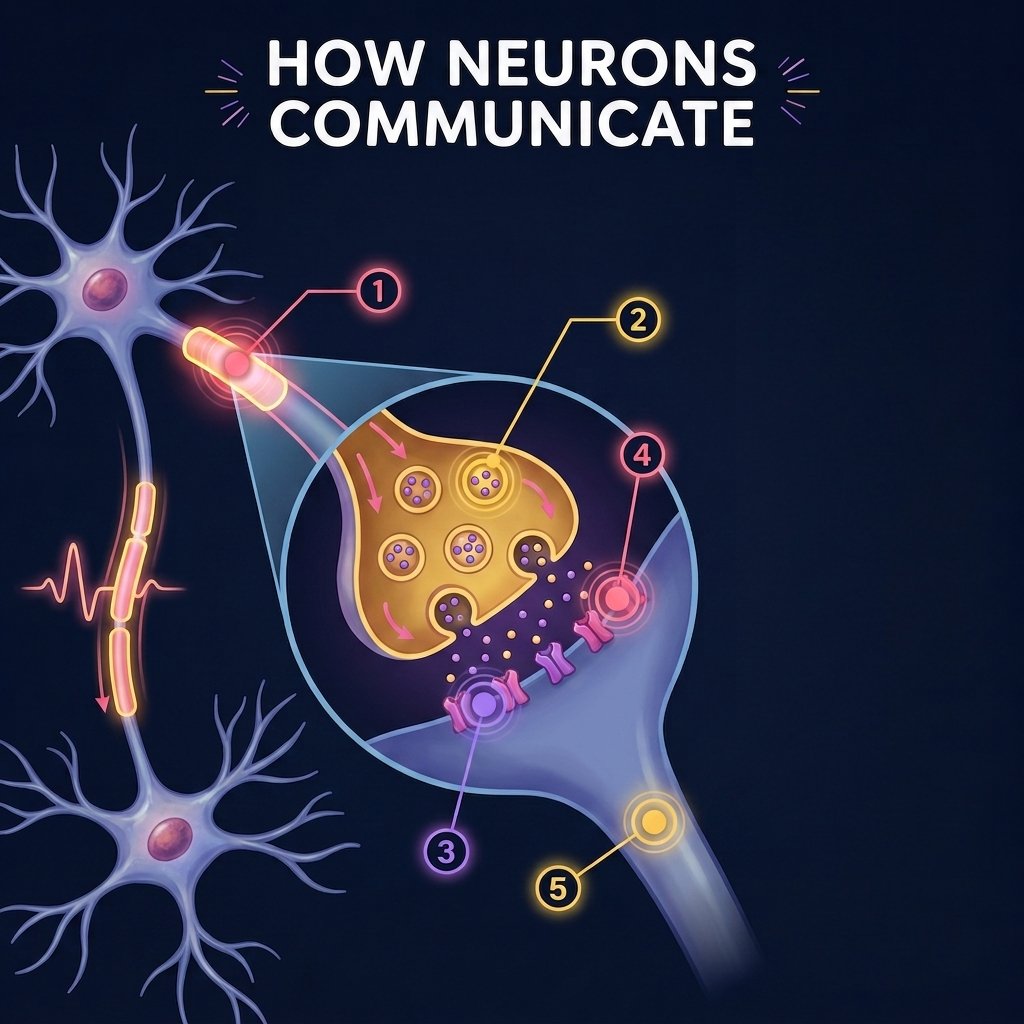
Diagram showing how neurons communicate, with numbered steps 1 through 5
Tap a glowing spot on the diagram to explore each step →
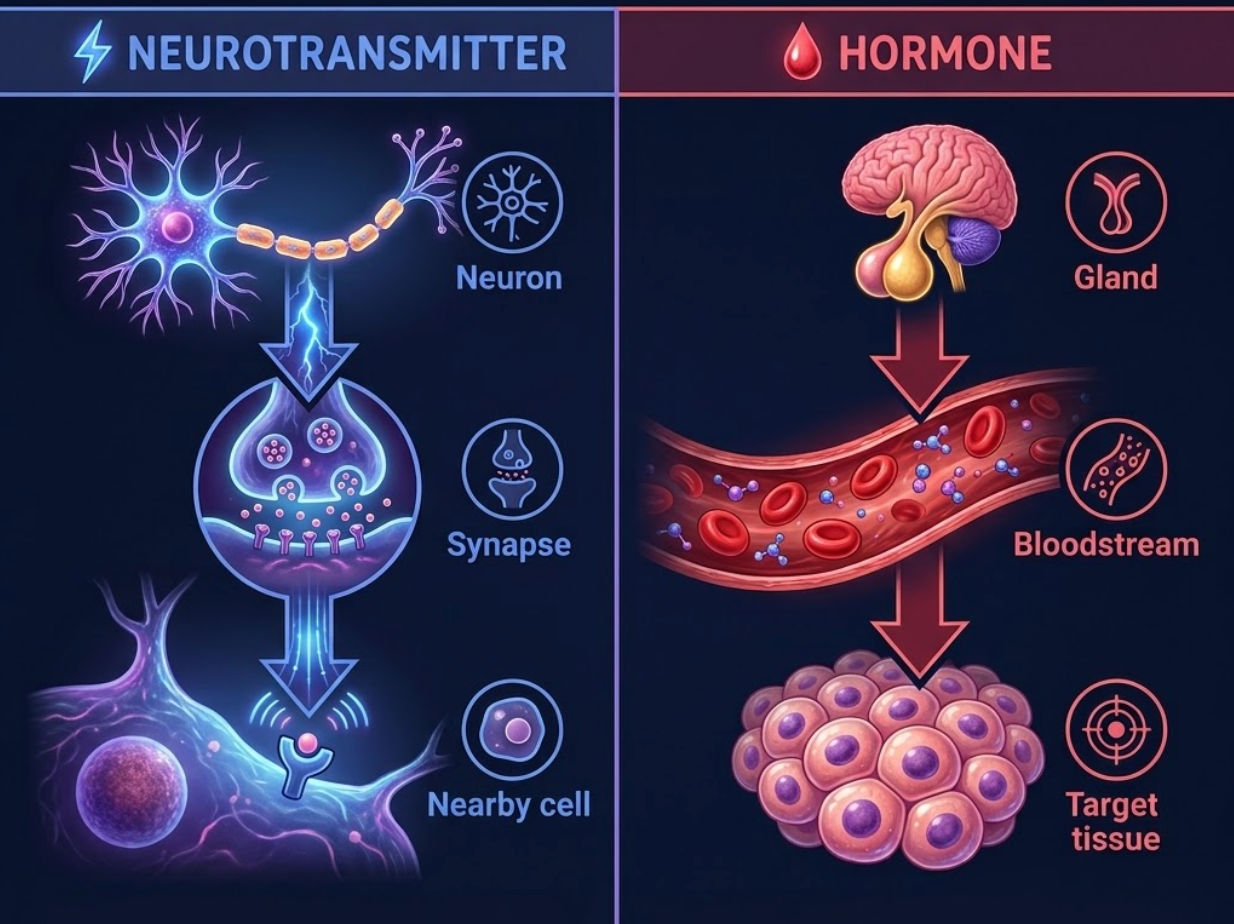
Hormones vs Neurotransmitters

Not all chemical messengers work the same way.

NEUROTRANSMITTERS
Neurotransmitters are chemical messengers used by neurons to communicate with other cells.
They are especially important for communication within the nervous system.
🩸
HORMONES
Hormones are chemical messengers released by glands or tissues that travel through the bloodstream to reach target cells.
They help coordinate processes throughout the body and can also influence the brain.
Visual comparison diagram of neurotransmitter communication at the synapse versus hormone communication through the bloodstream

But here's the important part:

Your brain and hormonal system don't work separately.

They constantly interact, meaning hormones can influence the brain, while the brain can also regulate hormone release.

Main Neurotransmitters

🔶
Dopamine
Reward · Motivation · Learning
Dopamine is a neurotransmitter involved in several important functions of the brain, including:
  • Reward
  • Motivation
  • Learning
  • Movement
  • Attention
Why can something as simple as getting a notification, winning a game, or finishing a task feel rewarding?
Dopamine is part of the brain systems involved in reward and learning, helping your brain respond to experiences and learn what may be worth pursuing again.
Adolescence connection
During adolescence, brain systems involved in reward, emotion and self-regulation are still developing and changing.
🟣
Serotonin
Mood · Sleep · Appetite
Serotonin is a neurotransmitter which is often called the "happiness chemical," but this is an oversimplification. It is also involved in:
  • Mood
  • Sleep
  • Appetite
  • Nausea
  • Other processes
Serotonin has many different roles throughout the brain and body, and its effects depend on where and how it acts.

Main Hormones

🔴
Cortisol
Stress response · Energy
Cortisol is a hormone involved in the body's response to stress, but it also has other functions:
  • Metabolism
  • Immune activity
  • Blood pressure
  • Energy
  • Sleep-wake cycle
Cortisol isn't automatically "bad." Your body needs stress hormones to respond to challenges.
The important question isn't "Is cortisol bad?" — it's how the stress system is activated and regulated over time.
Adrenaline
Rapid stress response
Adrenaline helps prepare the body to respond quickly by affecting:
  • Heart activity
  • Blood flow
  • Breathing
  • Alertness
"Ever felt your heart race before something important?"
That's your body rapidly preparing to respond.
🌙
Melatonin
Sleep-wake cycle
Melatonin helps regulate the timing of your sleep-wake cycle. Production is controlled by your body's internal clock and influenced by the light-dark cycle.
☀️ Daylight
Light entering your eyes sends signals to your brain's circadian clock, helping suppress melatonin production.
🌙 Darkness
As it gets dark, melatonin production normally increases, signalling biological night.

What changes during adolescence in chemical messengers?

Adolescence is a period of major biological and neurological change.

During puberty, hormonal changes affect the body and interact with ongoing changes in the brain.

At the same time, brain development continues, including changes in systems involved in things like:

Emotion Reward Decision-making Social behaviour Learning
This doesn't mean that "teenagers are controlled by their hormones."

Human behaviour is much more complicated than that.

Hormones, brain development, experiences, environment, sleep, social relationships and many other factors can interact.

What Happens When...?

Your brain chemistry isn't static. Different situations can activate different biological systems.

Choose a situation and explore more: